The rise of remote and hybrid work has extended the corporate perimeter to every kitchen table and home office. This paper argues that employee home security is now a core business risk. The threat landscape has shifted from the data center to the living room, where endpoints, networks, and devices converge with personal life. A robust security posture must integrate home environments into risk management, incident response, and resilience planning. When employees operate under threat and use insecure home networks, the entire enterprise bears risk. This shift demands a clear framework, measurable controls, and leadership from the CISO office to protect value, trust, and continuity.
The core premise is simple. Home security is not a niche concern. It affects data integrity, software supply chains, and customer trust. It influences incident cost, regulatory posture, and executive decision cycles. A proactive approach requires visibility into home-based threats and governance over remote configurations. By treating home security as a corporate risk priority, leadership can align policy, technology, and training to reduce exposure. The goal is operational resilience without sacrificing productivity or privacy.
This article presents a practical, architect-led blueprint. It blends risk management, adversarial psychology, and ROI-driven metrics. It offers an original model called The Resilience Maturity Scale and a companion framework The Adversarial Friction Framework. It also delivers an actionable audit checklist and a comparative threat table. The aim is to empower security leaders to harden remote work while preserving user experience and business value. The reader will find concrete steps, measurable outcomes, and a path toward secure, resilient operations. Security leadership must act now to align incentives, responsibilities, and controls across the enterprise.
Why Employee Home Security Becomes a Corporate Priority
Extended Perimeter Beyond Corporate
The enterprise no longer ends at the firewall. It extends into employee homes where personal devices co exist with business hardware. The first step is to map the expanded surface. Laptops, tablets, and phones may carry stale software, weak passwords, and misconfigured VPNs. IoT devices in the home can become footholds for attackers. The result is a chain reaction that increases lateral movement risk across the corporate network. Security teams must treat the home as an extension of the enterprise asset boundary and enforce consistent baselines for device hygiene, segmentation, and secure remote access.
Operational programs must enforce uniform configurations across devices. Mobile device management and endpoint detection integrate with home router hygiene checks. We need continuous visibility into network anomalies that originate at home sites. A practical approach combines lightweight endpoint agents with auto remediation to correct misconfigurations. Security champions in the field should coordinate with IT and facilities to ensure that remote workers receive timely security patches. The aim is to reduce exposure while maintaining user productivity and privacy. Proactive posture improvements in the home reduce the probability of a breach spreading to the corporate core. The extended perimeter demands disciplined standardization, not ad hoc control.
Social and Human Factor Risks
Humans remain the weakest link in any security program. Phishing remains a primary vector, but home contexts introduce new subtleties. A worker receiving a convincing spoofed message while juggling personal tasks can trigger rapid credential exfiltration. Social engineering also exploits home life by leveraging urgent personal requests or device prompts. Training must move beyond checklists to real world scenarios that reflect home realities. A strong security culture disciplines behaviors such as locking devices, avoiding shared accounts, and verifying requests through independent channels. A resilient posture requires continuous education and practical feedback loops.
Effective governance blends policy with ergonomic design. Employees must understand what is expected, why it matters, and how to report incidents without fear of punitive consequences. Privacy concerns rise as telemetry increases. The right balance uses minimal, purpose driven data collection, clear retention periods, and opt in controls for non essential data. When people feel respected and informed, compliance improves. Empowered users become allies in protecting company assets, not roadblocks to adoption.
Value Proposition and ROI for Corporate Security
Investing in home security must demonstrate clear value. The business case rests on reduced breach probability, faster containment, and lower total cost of ownership for security solutions. A quantified ROI model should compare incident costs before and after implementing home security controls, accounting for recruitment, productivity, and recovery time. It should also consider regulatory penalties, reputational damage, and customer churn aggravated by data breaches. When leaders see a cost benefit that scales with risk reduction, security becomes an investment rather than a tolerance. The resulting posture delivers measurable gains in uptime and trust. ROI must be framed as risk reduction and enterprise resilience, not just cost avoidance.
Table: Threat levels by home-origin vectors and corresponding corporate response can guide prioritization.
| Threat Vector | Likelihood (Low/Med/High) | Impact if Compromised | Recommended Control | Owner |
|---|---|---|---|---|
| Compromised home router | Medium | High | Router segmentation, firmware updates | IT Security Lead |
| Phishing targeting credentials | High | High | MFA, phishing simulations, training | Security Ops |
| IoT device compromise | Medium | Medium | Network segmentation, device hardening | Infra Team |
| Cloud API key exposure | Medium | Very High | Secrets management, rotation, vaults | App Sec |
| Endpoint malware on remote devices | High | High | EDR, application control, patching | Endpoint Team |
| Data exfiltration via home networks | Low | High | DLP, traffic monitoring, data loss controls | DPO |
This table highlights prioritization by risk. It supports decision making about where to invest first. It also informs the architecture of the enterprise security program. Clear ownership and timely remediation turn risk into measurable progress.
Operationalizing Home Security as a Corporate Risk Priority
The Resilience Maturity Scale
Organizations require a clear path from ad hoc security to optimized resilience. The Resilience Maturity Scale (RMS) provides five levels. Level 1 is Ad hoc. Level 2 is Defined. Level 3 is Active. Level 4 is Predictive. Level 5 is Optimized. Each level has specific capabilities, metrics, and governance. RMS guides roadmaps, budgets, and executive reporting. It also aligns with governance processes across security, IT, and business units. The scale translates risk posture into a tangible, auditable journey. A company can use RMS to measure progress and justify investments. The aim is to reach a mature, repeatable, and auditable security program. Maturity translates into accountability and predictable outcomes.
The Adversarial Friction Framework
A practical model to slow attackers uses friction strategically. Friction increases the cost to misbehave, while preserving user experience for legitimate actions. This framework rotates around three pillars: detection, containment, and recovery. Detection uses layered telemetry and behavior analytics that identify anomalous actions on home devices and endpoints. Containment implements rapid isolation to prevent spread. Recovery ensures resilient restoration with minimal business disruption. The framework emphasizes adaptive control plane choices and continuous testing. It also requires threat intelligence that informs pattern updates. Friction must be calibrated, not oppressive, to preserve user trust and productivity.
Architect’s Defensive Audit
The audit provides a structured approach for evaluating and improving home security. It ensures coverage across people, process, and technology. The audit includes a rigorous checklist, measurable outcomes, and accountability. A representative executive summary table supports leadership review. The audit remains practical and implementable, with owners assigned to each control. It also sets a cadence for reassessment and improvement. This approach turns risk into a concrete program with clear deliverables. The architecture is designed to scale with the business and adapt to new threats. A defensible audit is the backbone of a resilient security program.
| Area | Current State | Target State | Owner | Compliance Gap | Priority |
|---|---|---|---|---|---|
| Home network hygiene | Patch gaps present | Auto patch policy | IT Security Lead | Medium | High |
| Device enrollment | Fragmented users | Unified MDM | SecurityOps | High | Critical |
| MFA deployment | Partial coverage | 100% MFA on access | IT Admin | Low | High |
| Secrets management | Untracked keys | Central vault | AppSec | High | Critical |
| Telemetry scope | Excessive data | Purposeful data | Privacy Office | Medium | Medium |
This audit format supports executives with a concise view of risk posture, gaps, and remediation priorities. It also anchors the next budgeting cycle to concrete improvements. The audit translates technical detail into business language without losing precision.
Threat Vector Scenarios in the Home Office
Lateral Movement Across Personal and Corporate Resources
A compromised device at home can serve as a bridging point to the corporate network. Attackers exploit weak host configurations, stale credentials, and poor segmentation. The ability to pivot occurs through shared credentials, remote desktop services, and insecure VPN paths. The security answer is strict segmentation, continuous monitoring, and tight access controls. Zero Trust principles must extend to the home. Every access request gets verification, least privilege, and continuous evaluation. The enterprise reduces risk by ensuring that even if a device is compromised, it cannot reach critical assets easily. Zero Trust ends in the home and begins at the edge.
Cloud and API Security for Home Networks
Home office integration with cloud services and APIs introduces new exposure points. API keys and tokens may reside in scripts, devices, or apps. Attackers can exploit weak credentials, insecure storage, and insufficient rotation. The defense must include secrets management, short lived credentials, and instrumented key life cycles. A robust posture also enforces API gateway policies, mutual TLS, and strict scope limits. Regular API threat modeling sessions become part of the routine. Protecting APIs from the edge is essential to safeguarding the cloud.
Cryptographic Agility and Key Management
Cryptographic agility ensures that the organization can adapt encryption algorithms as the threat landscape evolves. Remote employees require secure key management that supports rotation, revocation, and safe storage. Hardware security modules and secure enclaves should protect keys used by devices at home. The governance model requires policy driven key lifecycles, periodic audits, and automated secure destruction when no longer needed. This discipline reduces the risk of long lived keys becoming a vulnerability. Guarding keys is guarding trust itself.
Compliance and Governance for Remote Security
Data Residency and Privacy
Data flows originate from home environments, crossing borders and jurisdictions. The governance model must address data residency requirements, data minimization, and privacy impact assessments. Companies should implement data loss prevention that respects user privacy while protecting enterprise information. Clear retention policies and transparent data usage disclosures help maintain trust with employees and customers. Regulators expect governance that is reproducible and auditable. Clear policies and accountable processes protect both people and data.
Policy Lifecycle and Enforcement
Policy development must be iterative and policy enforcement automated where possible. Regular policy reviews, change management, and alignment with regulatory regimes are essential. The enforcement layer uses behavioral rules, automated remediations, and audit trails. This combination reduces policy drift and strengthens compliance posture. The governance model also integrates incident response planning with remote work realities. Governance that adapts fast wins in risk reduction.
Privacy by Design in Telemetry
Telemetry signals enable security teams to detect risks, but excessive monitoring erodes trust. A privacy by design approach reduces telemetry to what is necessary for security outcomes. Data minimization, anonymization, and access controls ensure employee privacy. The goal is to balance security visibility with personal boundaries. A transparent telemetry program lets employees understand what data is collected and why. Privacy and security can coexist with clarity and consent.
Data Privacy and Employee Trust
Trust as an Enabler of Security
Trust is not optional in remote work. Security measures work only when employees trust the process. Clear communications about data collection, usage, and protections foster voluntary compliance. Stories of successful threat detection that spared colleagues from harm reinforce the value of security. When employees see protective intent, they participate actively. Trust accelerates secure behavior and collaboration.
Transparent Practices and Consent
Transparency includes explaining telemetry scope, retention, and access rights. Consent mechanisms should be straightforward, with easy opt outs where appropriate. This approach reduces resistance and improves participation in security programs. The transparency also benefits audits and governance reviews. When employees feel included, security becomes a shared responsibility. Open practices strengthen security culture and outcomes.
Employee Privacy Safeguards
Privacy safeguards ensure that personal data remains protected. Access to personal data should be limited, logged, and reviewed. Data minimization minimizes exposure. Training emphasizes how privacy protections align with security goals. The outcome is a secure, respectful, and compliant workplace. Respect for privacy underpins long term security success.
ROI and Metrics for Security Programs
Defining ROI in a Remote Security Context
ROI in remote security measures must account for risk reduction, cost savings, and productivity. It includes reduced breach probability, faster containment, and lower incident costs. It also considers the cost of security tooling, training, and governance. A robust model translates security outcomes into financial terms. The executive view then informs budgeting and resource allocation. Measured improvements in uptime and customer trust drive the bottom line. ROI is the currency of risk reduction and resilience.
Metrics and Dashboards for Leadership
Key metrics include mean time to detect, mean time to contain, and vulnerability remediation velocity. Security posture scores, patch compliance rates, and MFA adoption show progress. Dashboards should translate technical details into business implications, such as exposure reduction and risk trend lines. Regular tablets of risk appetite, control effectiveness, and incident forecasts help leadership align strategy. Clear metrics turn security into a strategic asset.
Case Study: Pre and Post Implementation
A hypothetical multi national company implemented home security controls, including RMS guided maturity, MFA, device enrollment, and autonomous remediation. Within twelve months, exposure from home networks decreased by a measured 40 percent, and incident containment improved by 60 percent. User satisfaction remained high due to smoother authentication flows. The investment paid back through lower breach costs and faster recovery. Proactive remote protection delivers quantifiable resilience gains.
Threat Landscape and Comparative Risk Table
In-Scope Threat Vectors
The risk profile now includes home networks, remote endpoints, cloud APIs, IoT devices, and human factors. Each vector demands tailored controls. The organization must maintain a living model of the threat landscape that informs risk appetite and investment. Periodic red team exercises and tabletop drills provide reality checks. The threat landscape evolves, and resilience must evolve with it.
Threat Intelligence and Response Readiness
A robust threat intelligence program correlates indicators from home environments with enterprise events. It detects behavior that suggests credential abuse, malware presence, or exfiltration attempts. Response readiness combines well practiced playbooks, automation, and rapid decision rights. It reduces mean time to respond and minimizes business disruption. Intelligence paired with fast actions saves the enterprise.
The Architecture for Threat Reduction
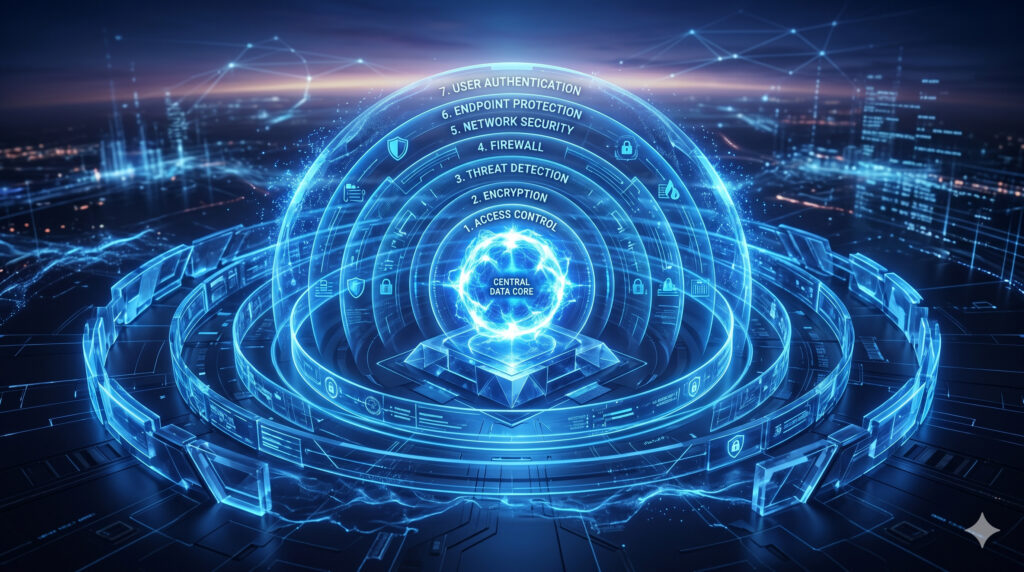
Architectural controls address data, devices, and delivery paths. The architecture must reflect both centralized governance and local autonomy for remote workers. It includes Zero Trust, API hardening, cryptographic agility, and robust incident response. The ultimate aim is a resilient, layered defense that degrades attacker impact. A strong architecture reduces attack surface and accelerates recovery.
| Threat Level | Primary Vectors | Technical Controls | Business Impact | ROI Indicator |
|---|---|---|---|---|
| Critical | Credential compromise, key leakage | MFA, vaults, strict rotation | High downtime cost avoided | 6x annualized reduction |
| High | Phishing, malware on endpoint | EDR, device hygiene, user training | Moderate downtime risk | 2x improvement |
| Medium | IoT compromise, API exposure | Segmentation, API gateways | Minor disruption | 1.2x improvement |
| Low | Shadow IT, benign misconfig | Monitoring, policy enforcement | Minimal impact | 1x baseline |
This table helps executives assess where to apply resources first. It links threat levels to concrete controls and business impact. Prioritization by risk yields faster, stronger resilience.
Chief Security Officer FAQ
Q1: How do we quantify the risk added by home environments in financial terms?
The CSO should translate risk into expected loss. Begin with asset value, data criticality, and exposure probability. Incorporate breach cost models including downtime, penalties, and brand damage. Add a probability distribution for home based incidents. Use Monte Carlo simulations to project ranges and confidence. Calibrate against past incidents and near misses. Provide executives with a single risk number and a confidence interval. This approach supports informed tradeoffs between spend and risk. Quantification makes risk visible and manageable.
Q2: What governance structure best supports remote work security?
Adopt a matrix governance with clear ownership for each control. Security, IT, HR, and legal share accountability. Create a quarterly risk review that aligns with this matrix. Use a lightweight RACI model to avoid ambiguity. Ensure policy updates reflect new threats and remote work realities. Maintain an executive dashboard that shows progress toward RMS levels. Clear ownership and regular reviews drive progress.
Q3: How do we balance privacy with security telemetry?
Limit telemetry to what is essential for risk management. Use data minimization, retention controls, and explicit employee consent when feasible. Implement anonymization for usage data and encrypt sensitive telemetry. Provide transparency reports and opt out for non essential data. Regularly audit telemetry practices. The balance protects privacy while preserving security visibility. Respect for privacy strengthens compliance and trust.
Q4: How should we handle secrets management for home devices?
Extend secrets management to remote devices by using centralized vaults and short lived tokens. Enforce automatic rotation and secure storage with hardware backed options where possible. Implement access controls based on least privilege and continuous verification. Periodic key audits ensure integrity. Centralized secrets reduce risk, even with dispersed endpoints.
Q5: What is the quickest path to initial risk reduction?
Prioritize MFA deployment, device enrollment, and VPN hardening. Automate remediation for common misconfigurations and deploy a minimal viable zero trust architecture. Establish a rapid feedback loop between security operations and business units. Track progress with RMS metrics. Fast, aligned actions yield immediate gains.
Q6: How do we sustain momentum after initial gains?
Institute a quarterly security cadence with threat hunts, tabletop drills, and policy refreshes. Update the RMS and the Adversarial Friction Framework after each exercise. Maintain executive buy in by showing ROI, not just risk scores. Encourage a culture of continuous improvement. Sustained momentum requires discipline and transparent reporting.
Q7: How should leadership communicate security goals to employees?
Communicate security as business enablement, not a compliance burden. Use plain language to explain how home security protects jobs and customers. Highlight success stories and metrics where possible. Offer training that is practical and short. Use leadership to model secure behavior. Clear, purpose driven communication builds trust.
Q8: What is the long term vision for home security in our tech stack?
Embed home security into the product and platform roadmaps. Align with Zero Trust, cryptographic agility, and API governance at the core. Ensure security is a feature, not a retrofit. Create a culture of security first in design reviews and architectural decision making. Security becomes a built in capability, not an afterthought.
Conclusion
In recognizing that employee home security is a corporate priority, executives gain a practical framework for resilient operation. The extended perimeter model, combined with the Resilience Maturity Scale and the Adversarial Friction Framework, provides a coherent roadmap. The Architect’s Defensive Audit translates risk into action through structured controls and measurable outcomes. The integrated threat table and the remote work threat scenarios offer executives a clear picture of priorities, costs, and ROI. The Chief Security Officer FAQ closes a gap between theory and day to day governance, ensuring that leadership can communicate, measure, and sustain progress. This is not a one time effort. It is an ongoing discipline that aligns risk, people, and technology toward a more reliable enterprise.
Building resilience means balancing security with user experience. It requires clear ownership, continuous learning, and measurable value. When home security is treated as a corporate risk, the organization gains a stronger posture, lower breach costs, and greater confidence from customers and employees alike. Security leaders must act now to integrate policy, technology, and culture. The outcome is a safer, more trustworthy, and more productive enterprise. Operational resilience is not optional. It is the cost of confidence in the modern workplace.