
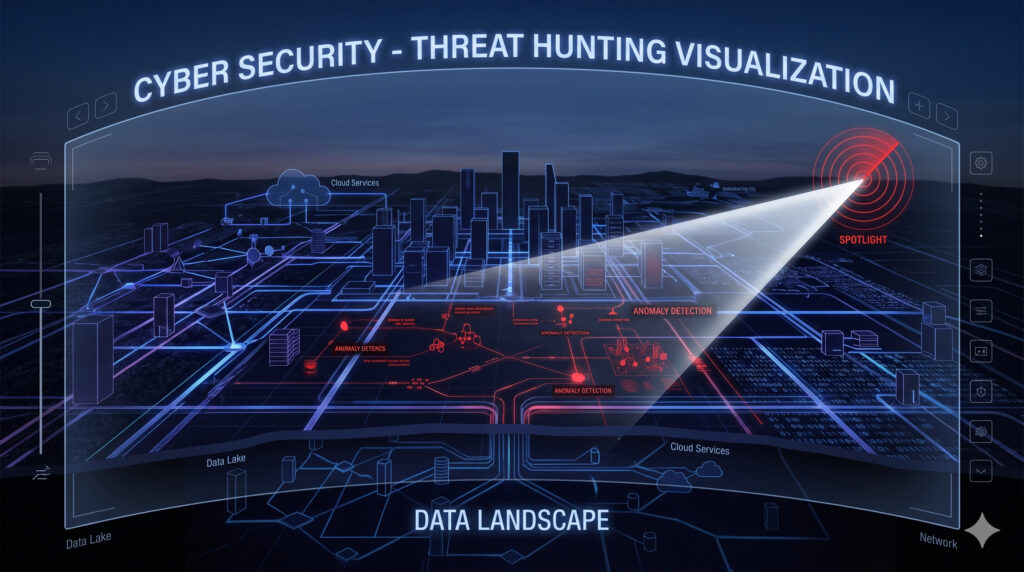
CybersecurityDay.lu presents a strategic briefing on designing deep visibility architectures that expand endpoint detection and response (EDR) across complex Linux fleets. The intention here addresses the executive need to quantify residual risk, outline engineering tradeoffs, and align detection capabilities with European regulatory requirements through actionable architectural decisions. The briefing combines tactical indicators, operational patterns, and governance mappings relevant to CISOs, CIOs, and DevSecOps leaders operating in 2026.
Deep Visibility Architecture for Linux EDR at Scale
The operational imperative for Linux EDR at scale is to convert telemetry fidelity into deterministic detection and timely containment without imposing prohibitive performance or compliance costs. The architecture must prioritize kernel-level instrumentation, lightweight userspace collectors, and resilient telemetry pipelines that preserve provenance and chain-of-custody for audits. Strategic reality requires balancing sensor fidelity against fleet heterogeneity, patch cycles, and cloud-native footprints to prevent visibility gaps that adversaries exploit.
Architecture Overview
The core architecture leverages eBPF and syscall tracing for process, network, and file activity, combined with integrity measurements from kernel modules where regulatory constraints permit. Telemetry normalizes events into an enriched event model that supports MITRE ATT&CK mappings, high-fidelity behavioral baselines, and contextual identity attribution via IAM metadata. Operationally, the design separates collection from analysis to allow centralized detection rules, cross-host correlation, and retention policies compliant with GDPR and DORA archival requirements.
Core Components
Telemetry collectors must run as immutable, minimal-privilege agents, providing local buffering, cryptographic signing, and policy-driven throttling to handle offline or bursty networks. A scalable ingestion layer, built on partitioned streaming and backpressure-aware queues, enforces schema validation and lineage tagging for forensic replay. Detection engines use hybrid models: signature matchers for CVE exploitation patterns and behavioral models for living-off-the-land techniques commonly used by APT groups.
Extending EDR Capabilities Across Enterprise Linux Fleets
Extending EDR capabilities means converting point sensors into a distributed detection fabric that enforces standard controls, accelerates response, and provides auditable evidence across clouds, data centers, and edge devices. The practical outcome for leadership is measurable reduction in mean time to detect and contain, and demonstrable compliance posture improvements against NIS2 and DORA. Strategic deployment models must fit containerized workloads, immutable infrastructure, and legacy distributions without disrupting availability.
Deployment Patterns
Rollouts should follow a phased, risk-prioritized approach that begins with high-value assets, critical control planes, and externally exposed hosts, then expands to developer and test environments. Use canary clusters, staged kernel module approvals, and tuned eBPF probe sets to reduce performance regressions and false positives. Automation for policy rollout, via infrastructure-as-code and CI/CD gate checks, enforces consistent agent configurations and reduces drift across heterogeneous package managers and kernels.
Capability Extensions
EDR extends through integration points: runtime container visibility, cloud metadata enrichment, and identity correlation between PAM sessions and process activity. Add-on capabilities include host-based deception controls, file integrity monitoring with verified hashes, and retroactive queryable forensic stores for long-tail investigations. Operationally, enable remote remediation primitives and policy-driven isolation, but restrict automated destructive actions behind human-in-the-loop approvals for regulated environments.
Threat Intelligence and Operationalization
Operational value of threat intelligence lies in converting raw indicators into prioritized, actionable detection content that maps to enterprise risk and existing controls. Intelligence must tie TTPs to detection signatures, map CVE exploitation windows, and provide confidence levels that feed SOC triage and automated responses. The evidence suggests that combining external commercial feeds with internal telemetry-derived indicators yields the highest precision for Linux-targeted attacks.
Threat Matrix and Indicators
Create a named threat matrix, the "Linux Deep Visibility Threat Matrix", mapping APT groups, common CVEs, persistent mechanisms, and high-confidence indicators to detection patterns and response playbooks. This matrix should include prioritized indicator sets such as file hashes, kernel exploit signatures, and anomalous cron or systemd unit activity that historically precede lateral movement. Use confidence scoring and attribution tags to reduce analyst fatigue and focus investigative resources on likely incidents.
Integration with TI Feeds
Operationalize feeds through automated enrichment that correlates IOC streams with internal process lineage and identity metadata, tagging events for severity and compliance impact. Ensure feeds undergo normalization and scoring before injection into detection rules to prevent alert storms from low-confidence indicators. Integrate embargoed intelligence carefully to respect disclosure obligations and legal constraints under GDPR when handling third-party data.
Security Operations, Detection, and Response Automation
The objective of detection engineering is to produce precise, explainable detections that integrate into SOC workflows and enable scalable response while preserving evidentiary integrity. Detection rules must combine temporal chaining, parent-child process relationships, and environment context to identify living-off-the-land tactics and kernel exploits. Strategic operations rely on automation that reduces manual investigation time while maintaining escalation paths for high-impact incidents.
SOC Workflow and XDR Integration
EDR telemetry must feed centralized XDR and SIEM environments with normalized, high-fidelity events, enabling multi-signal correlation across identity, network, and cloud telemetry. Analysts require pre-built hunt queries, prioritized alerts, and lineage visualizations that connect alerts to impacted assets and regulatory scopes. Use score thresholds and adaptive baselining to tune alerting and to align work queues with service-level objectives for detection and containment.
Response Orchestration and Playbooks
Response automation should include tiered playbooks: enrichment and triage for low-risk alerts, containment and rollback for confirmed exploitation, and forensic preservation for incidents with regulatory impact. Orchestration must respect access controls and require attestation for actions affecting production systems, aligning with Zero Trust principles and PAM controls. Maintain a measurable rollback capability and test playbooks under live-fire exercises to validate timing, permissions, and audit trails.
Governance, Risk, Compliance and Auditability
Deep visibility must map directly to governance outcomes, providing auditable evidence of control effectiveness for NIS2, DORA, GDPR, and national regulator circulars. Controls should generate preserved artifacts including signed event logs, chain-of-custody metadata, and retention policies that meet legal hold requirements. Risk reporting requires quantifiable metrics tied to business impact, such as time-to-detect, mean time-to-contain, and percent visibility across critical assets.
NIS2, DORA, GDPR Mapping
Map each detection and response control to regulatory obligations, specifying which telemetry provides evidence for incident reporting thresholds, root cause determination, and notification timelines. Provide compliance owners with dashboards that link controls to evidence artifacts, enabling quicker audit responses and reducing penalty exposure. Ensure data minimization and lawful processing constraints apply to telemetry retention and cross-border transfers.
Audit, Evidence Collection, and Reporting
Implement immutable logging, digital signatures, and indexed forensic stores to support investigations and to prove chain-of-custody during audits. Generate per-incident evidence bundles that include hashed artifacts, signed timelines, and a clear linkage to identity and access events demonstrating who acted and when. Regularly exercise the evidence collection pipeline under red-team scenarios to validate that preservation and legal hold processes function under operational stress.
Implementation Blueprint and Operational Economics
The implementation blueprint delivers a pragmatic plan for rolling out extended EDR capabilities while quantifying unit economics, operational headcount implications, and infrastructure costs. Decision metrics must include per-host telemetry volume, retention costs, analyst hours per alert, and mitigation SLAs tied to key asset classes. Strategic deployment choices materially affect cloud billing, on-prem storage, and SOC capacity planning.
Architectural Blueprint Table: Linux EDR Deep Visibility Metrics
The following table, the "EDR Deep Visibility Scorecard", compares telemetry sources, expected event rates, target retention, and a maturity score for rapid executive assessment.
| Control Area | Typical Event Rate / Host/Day | Retention Target | Maturity Score (1-5) |
|---|---|---|---|
| Process lineage (eBPF) | 1,200 events | 30 days | 5 |
| Network flows (conntrack) | 600 events | 90 days | 4 |
| File integrity checks | 30 events | 365 days | 4 |
| Kernel exploit indicators | 5 events | 730 days | 3 |
| Identity correlation events | 150 events | 90 days | 5 |
This scorecard provides executives with a concise quantitative snapshot linking telemetry volume to retention and maturity, enabling rapid budget estimation.
Cost Models and Scale Considerations
Estimate per-host telemetry ingestion, including bandwidth, storage, and processing costs, then model SOC staffing needs tied to expected alert volumes and false positive rates. Optimize retention via tiered storage and queryable compression, retaining high-fidelity raw data for short windows and aggregated metadata for long-term compliance. The evidence indicates that modest investments in signal quality reduce analyst time and downstream incident costs more than equivalent spend on raw storage.
FAQ
How should an enterprise prioritize hosts for initial deep visibility deployment?
Start with hosts that process regulated data, run critical control planes, or present external exposure, and map these to business impact tiers for phased rollout. Implement minimal configurations for broad coverage, then increase probe depth on prioritized tiers while monitoring performance and false positives.
What indicators best signal kernel-level compromise on Linux?
Suspicious kernel module loads, anomalous syscall patterns detected via eBPF, and unexpected modifications to /proc or /sys are high-confidence signals of kernel abuse. Correlate these with sudden privilege escalations and cross-host lateral movement to validate severity and scope.
How do we maintain forensic integrity while complying with GDPR for telemetry?
Use pseudonymization on persona-linked telemetry, preserve cryptographic signatures for evidence, and apply retention rules mapped to lawful bases and incident reporting needs. Ensure Data Protection Impact Assessments and processor agreements govern any cross-border telemetry transfer.
What is the recommended approach for detection tuning to reduce analyst fatigue?
Implement staged rollouts of detection rules, use confidence scoring and suppression windows, and prioritize detections that chain to high-value assets or high-severity CVEs. Continuous tuning relies on closed-loop feedback from SOC analysts and periodic red-team validation.
How do we justify EDR scale investments to the board in financial terms?
Model avoided incident costs using industry averages for breach impact, subtract projected detection and containment improvements from current baselines, and present ROI across three years including reduced downtime and regulatory fines. Highlight measurable KPIs such as reduced mean time to detect and percent of critical asset coverage.
Conclusion: Deep Visibility Architecture Implementing Extended EDR Capabilities Across Enterprise Linux Fleets
Deep visibility architectures convert telemetry into business-grade detection, containment, and compliance evidence, and they require deliberate engineering to scale across diverse Linux environments. The strategic imperative for leaders is to fund signal quality, resilient ingestion, and integrated response orchestration to materially lower residual breach risk. The evidence suggests targeted investments in eBPF-based collection, centralized correlation, and automated playbooks yield disproportionate reductions in incident costs.
Strategic Summary
Prioritize kernel-aware telemetry, identity correlation, and regulatory mapping to ensure detections align with business-critical risk and audit demands. Maintain a staged deployment cadence, invest in detection engineering, and govern telemetry with privacy-preserving controls to satisfy NIS2 and DORA obligations. Expect ongoing tuning and iterative investments as adversaries adapt.
12-Month Forecast
Over the next 12 months, anticipate increased vendor consolidation around eBPF and host telemetry standards, growing regulatory scrutiny of cross-border telemetry flows, and greater adoption of XDR platforms that fuse identity, cloud, and host signals. Investment will shift toward detection engineering, automation for containment, and evidence preservation to meet rising incident-reporting demands and to reduce operational response costs.
Tags: Linux EDR, eBPF, threat intelligence, SOC automation, NIS2 compliance, forensic readiness, enterprise cybersecurity