
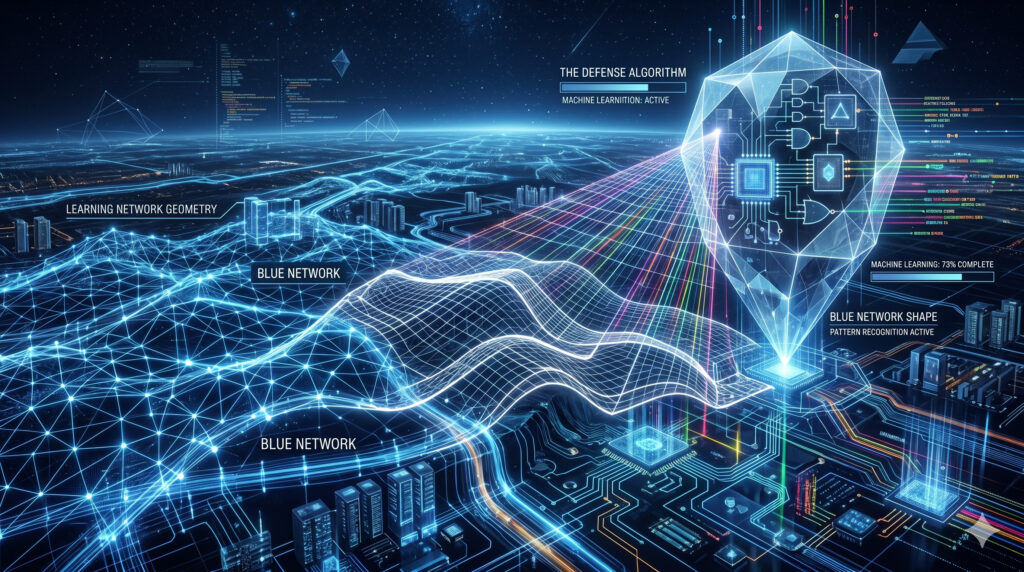
The EdTech Security Stack, and the privacy standards that govern it, shape how learning happens in the virtual classroom. This white paper analyzes the threat landscape and articulates a practical approach to privacy by design. It centers on the EdTech Security Stack for the Virtual Classroom and builds an operational blueprint for resilience, risk mitigation, and measurable ROI. The objective is clear, persistent, and executable: secure data flows, trusted platforms, and auditable governance that teachers, students, and administrators can rely on.
In this context the article frames a robust architecture for privacy, guided by Zero Trust principles and cryptographic agility. We address API hardening, data minimization, and defensible incident response. The goal is not to chase maturity for its own sake but to deliver concrete protections that reduce risk and enable effective teaching. The guidance blends policy, technology, and risk science into a coherent, action focused framework.
Finally, the paper introduces an original model called The Resilience Maturity Scale and a complementary framework named The Adversarial Friction Framework. These tools help leaders quantify risk posture and measure progress. The result is an ROI driven blueprint that supports sustained privacy without sacrificing educational outcomes.
Securing EdTech Privacy Standards in the Virtual Classroom
Data Governance and Compliance
The introduction of privacy standards must begin with governance that ties to policy, process, and people. Schools should map data types to legal regimes and stewardship roles. A data inventory creates visibility, while data retention schedules limit exposure. Privacy by design informs every software release from the vendor to the school. Data minimization reduces the surface of risk and speeds incident handling. Compliance proves an accountability loop that can be audited by boards and regulators.
Architectural Controls and Policy Enforcement
Privacy in the virtual classroom hinges on architecture that enforces policy at every layer. Identity and access management must implement least privilege, strong authentication, and continuous verification. Network segmentation minimizes lateral movement if a breach occurs. API hardening reduces exposure from third party integrations. Security controls must be visible in operation with automated policy enforcement and clear escalation paths.
Closing Summary
The heading emphasizes governance and architecture as inseparable. A strong privacy posture comes from coordinated policy making and practical controls. The next heading expands on threat mitigation and ongoing privacy monitoring in the EdTech stack.
Mitigating Threats and Ensuring Privacy in EdTech
Threat Landscape and Risk Profiling
Educators and learners face a diverse set of threats from credential stuffing to data exfiltration. Malware linked to ad tech and browser extensions can siphon student data. Adversaries may exploit weak session management during virtual lessons. The risk picture changes with supply chain compromises and insecure API endpoints. A disciplined risk profile informs where to apply controls and how to calibrate monitoring.
Controls and Monitoring
Active defense requires continuous monitoring, anomaly detection, and rapid response. Zero Trust principles demand constant verification and micro segmentation. Data in transit must be protected with strong crypto and integrity checks. Automated alerts tied to a central security operations center ensure timely containment. Contracts with vendors should include privacy impact assessments and breach notification obligations.
Closing Summary
This section links threat awareness to concrete protections. The next section introduces an engineering lens on how to operationalize these protections using a resilient framework and practical metrics.
The EdTech Security Stack: Practical Frameworks
The Resilience Maturity Scale
This section introduces The Resilience Maturity Scale, an original model to quantify resilience across people, process, and technology. The scale includes five levels and tangible milestones. Level 1 establishes awareness and governance. Level 2 codifies data minimization and access controls. Level 3 strengthens monitoring and response capabilities. Level 4 integrates risk based decision making and vendor management. Level 5 proves sustainable, auditable, and adaptive security. The model helps schools and vendors track progress and justify investments. It aligns with ROI driven security by linking maturity to measurable outcomes.
The Adversarial Friction Framework
The Adversarial Friction Framework helps teams anticipate attacker behavior and design defenses that slow adversaries. It frames security as a set of friction points in the attack chain. Each friction point contributes to detection probability, containment speed, and recovery readiness. The framework emphasizes timing, incentives, and actionable indicators. It supports decision making under uncertainty and guides resource allocation toward the most impactful controls. Together these models provide a practical lens for asset protection and program governance.
Closing Summary
The section provides two practical models that translate theory into action. The next section translates policy into concrete architecture with Zero Trust and API hardening.
Zero Trust and API Hardening in EdTech
Zero Trust Implementation
Zero Trust begins with verified identity for every request and ends with continuous verification of context. This approach requires robust identity management, least privilege access, and micro segmentation. Enforcing policy at the data layer prevents over permission. Regular proof of ownership for devices, apps, and sessions is essential. The outcome is a dynamic trust boundary that adapts to evolving risk.
API Hardening and Third Party Risk
APIs expose surface area that attackers can exploit. Hardening includes strong authentication, strict scoping of permissions, and binding of tokens to specific contexts. Rate limiting and anomaly detection prevent abuse. Third party integrations must be evaluated for privacy impact and supply chain risk. Cryptographic agility ensures keys rotate safely without service disruption. Proper API governance reduces the chance of data leaks and misconfigurations.
Closing Summary
Zero Trust and API hardening are essential to protecting the virtual classroom. The next section provides a structured approach to modeling and defending against privacy risks.
Threat Modeling for the Virtual Classroom
Modeling Privacy Risks
Threat modeling identifies where data flow could leak or be misused. It maps data paths from students to servers, to vendors, then back to dashboards. It also considers insider risk and inadvertent exposure. The model helps prioritize controls where they will have the most effect and guides testing efforts. Regular updates are necessary as new apps enter the stack or as teaching methods evolve.
Privacy Testing and Validation
Testing validates that privacy controls perform as intended. Penetration testing, red team exercises, and privacy impact assessments are essential. Test data must be isolated and protected at all times. Validation also covers vendor risk assessments and contract clauses. The goal is to uncover gaps before they impact students, while maintaining continuity of learning and data integrity.
Closing Summary
This section links risk modeling to validation. The next section discusses data protection and cryptographic strategies for long term resilience.
Cryptographic Agility and Data Minimization
Cryptographic Agility
Cryptographic agility ensures the system can switch algorithms or keys without downtime. It reduces exposure when a weaker algorithm becomes vulnerable. A flexible key management plan and well defined rotation cadence are critical. This capability future proofs the platform against evolving threats and standards.
Data Minimization and Retention
Minimization means collecting only what is necessary for instruction and compliance. Clear retention policies prevent data hoarding and exposure. Data anonymization and pseudonymization reduce risk while preserving analytics value. Regular reviews remove stale data and adjust data collection practices as the learning context evolves.
Closing Summary
The cryptographic and data minimization stance complements governance and architecture. The next section moves from audit to operational planning and defense readiness.
Architect’s Defensive Audit and ROI
Architect’s Defensive Audit
Executive defense checks are essential. An audit covers governance, data handling, system topology, and incident response procedures. The audit assesses alignment with policy, regulatory obligations, and supplier contracts. It verifies that security controls are active, tested, and well documented. The result is a clear, auditable record of resilience.
Risk Scoring Table and Protocols
The risk scoring table below quantifies threats across five dimensions. It includes likelihood, impact, controls, and residual risk. A step by step protocol guides remediation and monitoring. The table helps leaders compare scenarios and allocate resources efficiently.
The Detail Protocol: Step by Step
1) Identify critical data assets. 2) Map data flows to risk points. 3) Implement least privilege for all roles. 4) Enforce cryptographic protection for data in transit and at rest. 5) Validate controls through tests and drills. 6) Review vendor privacy terms quarterly. 7) Reassess risk after every major release. 8) Report results to senior leadership.
Closing Summary
The audit framework ties governance to measurement. The next section explains how the Chief Security Officer will address common concerns and questions.
Chief Security Officer FAQ
Q1: How do we justify privacy investments to educators and parents?
A1: The answer shows how privacy reduces risk and supports learning outcomes. It ties cost to measurable safety metrics, such as reduced incident response time and lower breach costs. It also demonstrates alignment with student rights and regulatory expectations. The ROI calculation compares annualized protection cost to expected risk reduction, giving a clear financial picture and a compelling narrative for stakeholders. The emphasis remains on outcomes that matter to classrooms and governance boards.
Q2: What is the minimum data set we should collect for virtual classes?
A2: The minimum data set includes essential identifiers, learning progress metrics, and necessary contact data. It excludes sensitive data not required for instruction or compliance. Data collection aligns with the principle of least privilege. A robust data map clarifies what data is collected, why, who accesses it, and how long it is retained. Regular audits verify that only approved data is used for the intended purpose.
Q3: How do we enforce data minimization with external vendors?
A3: Enforce data minimization through contracts and technical controls. Require vendors to implement data protection by design and provide data sharing limitations. Require independent privacy assessments for each integration. Use standardized data processing agreements with clear roles and breach notification timelines. Continuous monitoring verifies that vendors comply with policy. The governance model ensures that external partners are held accountable for privacy outcomes.
Q4: How should we measure the effectiveness of Zero Trust in EdTech?
A4: Measure effectiveness by tracking access anomalies, incident counts, and mean time to containment. Collect metrics on authentication failures, device health checks, and token lifecycles. Use a dashboard that correlates these metrics with learning outcomes and user experience. The data should inform remediation and policy adjustments rather than simply confirming compliance.
Q5: What is the role of cryptographic agility in day to day operations?
A5: Cryptographic agility protects you from future threats without downtime. It requires a modular crypto stack, clear key management, and rapid rotation. Operationally, you validate algorithms before enabling them. You monitor for deprecation notices and plan migrations during maintenance windows. The result is sustained security postures even as standards evolve.
Q6: How do we prepare for a data breach in a virtual classroom?
A6: Preparation starts with an incident response plan that includes defined roles and runbooks. Practiced drills improve detection, containment, and recovery. Post incident reviews feed lessons into policy updates and training. A privacy focused breach response reduces student harm and preserves trust with families and regulators.
Q7: How do we balance privacy with analytics for learning insights?
A7: Balance comes from anonymization, pseudonymization, and privacy preserving analytics. Use aggregated data and secure multi party computation where possible. Ensure students can opt out of analytics and maintain transparency about data use. The goal is to preserve instructional value while limiting exposure and preserving privacy.
Closing Summary
The FAQ addresses governance, operations, and stakeholder trust. The final section closes with a roadmap to implement the recommended privacy program.
Conclusion and Roadmap – EdTech Privacy Standards
Roadmap to Implementation
Organizations should begin with a data inventory and governance charter. Build Zero Trust into the core architecture and extend it to APIs and third party integrations. Adopt the Resilience Maturity Scale to measure progress and communicate results. Use the Adversarial Friction Framework to guide testing and prioritization. Establish a quarterly audit cadence and a continuous improvement loop. The roadmap emphasizes quick wins and long term resilience, with regular executive reviews.
Metrics and Governance
Track privacy metrics alongside learning outcomes. ROI should reflect risk reduction, cost per breach, and time to containment. Governance requires clear roles, responsibilities, and escalation paths. Align privacy goals with instructional objectives to preserve trust and enable scalable virtual learning.
Closing Summary
The document presents a practical blueprint for securing privacy standards. It translates policy into concrete, auditable actions. It highlights your ability to protect students while preserving a productive learning environment.