
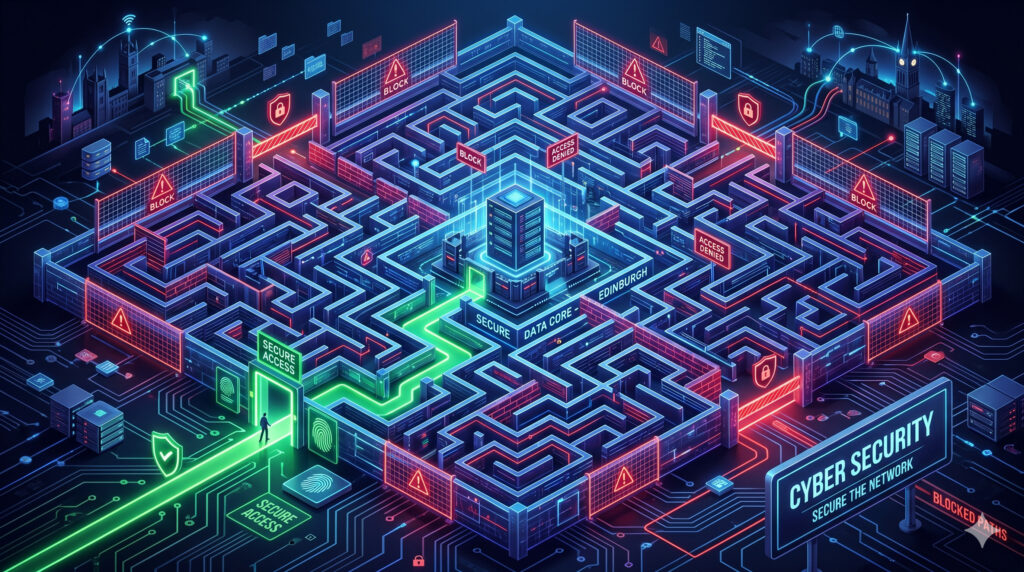
The purpose of an internal Cyber Day goes beyond ticking boxes. It stands as a strategic lever to fuse security discipline with global business ambitions. The day must translate risk, resilience, and incident learnings into practical action that line leaders can own. A successful event elevates the security posture across regions and functions while delivering measurable ROI.
The challenge is to balance technical depth with executive relevance. Security teams must speak in business terms while preserving rigor. This day should reveal gaps, test response speed, and cement a culture of shared accountability. The outcome is a safer, more resilient enterprise that still moves with speed and agility.
Finally, leadership must design the experience for execution. Clear goals, evidence based metrics, and a defined post event plan ensure momentum. When done properly, a World Class Cyber Day becomes a catalyst for ongoing risk reduction and sustained global excellence. ===INTROEND
Leading an Internal Cybersecurity Day for Global Excellence
Setting the Vision and Scope
The vision anchors the event to business outcomes. It frames risk in terms of revenue impact, customer trust, and regulatory compliance. Leaders should define success criteria early. That clarity guides content choices, speakers, and exercises. A focused scope helps avoid scope creep that dilutes impact. The core aim is to improve resilience through practical improvements that survive the next quarterly cycle.
A well defined scope aligns regional teams with central strategy. It ensures consistency across locations while allowing local adaptations. The event should address both strategic and tactical topics. It must cover governance, incident response, and risk communication. A crisp charter keeps teams focused and accountable.
In practice the vision should be measurable. Establish targets for detection speed, containment time, and recovery time. Track improvements against baseline metrics from the prior year. The outcomes should feed the security roadmap. A transparent dashboard supports accountability and continuous learning. Bold leadership signals seriousness and commitment to global excellence.
Executive Sponsorship and ROI
Executive sponsorship creates credibility and accountability. Sponsors must allocate time, budget, and decision rights. They set expectations for what the day will deliver. They also sponsor post event actions. This link between the event and a concrete road map matters most. Without it the day remains a nice exercise.
ROI must be measurable and credible. Tie results to tactical metrics such as mean time to detect, dwell time reductions, and phishing click rates. Also quantify operational efficiencies from improved runbooks. This approach demonstrates value to business leaders. It makes security a driver of risk reduction rather than a cost center.
A strong charter makes sponsorship real. It defines milestones, owners, and decision gates. Sponsors should require a quarterly review of progress. The review should examine gaps, threat trends, and allocation of resources. When sponsorship is visible, teams act with urgency and precision. The day then becomes a real lever for global excellence.
Practical Leadership Tactics for a World-Class Cyber Day
Operational Playbooks and Runbooks
Operational playbooks translate strategy into action. They describe who does what and when during a security event. Playbooks should cover detection, triage, containment, and recovery. They must stay current with the threat landscape. A clear playbook reduces decision latency under pressure.
Runbooks complement playbooks by detailing step by step actions. They provide checklists, data collection guidance, and escalation paths. Runbooks should be tested in tabletop exercises. Regular updates keep them aligned with new tools and services. Strong runbooks speed up response and minimize missteps.
The operational framework must support cross functional teams. IT, security, and business units need shared tools and vocabulary. A common run book helps everyone act in concert during a real incident. The day then reinforces speed, accuracy, and alignment across the organization.
Engagement Formats and Metrics
Engagement formats must sustain attention and deliver learning. Interactive modules, live simulations, and expert panels each play a role. Formats should allow for real time feedback and Q and A sessions. The objective is to extract practical insights that teams can implement quickly.
Metrics drive accountability. Use a balanced set of leading indicators and lagging indicators. Leading indicators include participation rates, scenario completion, and time to decision. Lagging indicators cover post event remediation and risk reduction. A dashboard translates data into executive insights.
The event design should balance depth with accessibility. Include technical deep dives for security staff and business oriented briefings for executives. Spacing sessions with breaks and interactive moments maintains energy. A well curated agenda yields actionable outputs rather than impressions.
The Architect’s Defensive Mindset and Event Oriented Security
Threat Landscape and Adversarial Psychology
The adversary tests a security posture relentlessly. The threat landscape shifts with supply chain risk, API exposure, and cloud misconfigurations. Understanding attacker psychology helps frame defenses. Adversaries seek speed, stealth, and misdirection. A careful study of their patterns informs more effective controls.
Security leaders must anticipate lateral movement and data exfiltration risks. They should map typical attacker playbooks to defensive gaps. This mapping supports targeted defenses and quicker detection. Recognize how fear, uncertainty, and doubt can influence decision making. Plan communications to reduce panic and preserve rational action.
An event focused on psychology improves resilience. Run drills that reveal cognitive biases within teams. Train on decision making under stress, not just on technical steps. This approach strengthens both technical and human layers of defense. The result is a more robust security posture and a calmer response during incidents.
Lateral Movement Controls and API Hardening
Lateral movement remains a primary risk. Segment networks and enforce micro perimeters with Zero Trust principles. Validate credentials and monitor for unusual paths across the environment. Strong lateral controls slow attackers and preserve data. Tight control of east west traffic is essential for containment.
API hardening is critical in modern architectures. Use mutual TLS, strong authentication, and signed requests. Enforce least privilege for API calls and monitor API usage patterns. Protect sensitive data with encryption at rest and in transit. Regularly audit API gateways for vulnerabilities and unusual activity.
Successful event readiness blends people and technology. Runbooks should specify containment steps for compromised services and compromised credentials. Teams should practice rapid isolation to keep the blast radius small. Resilience improves when architecture and people move in lockstep.
Operational Resilience through Culture and Training
Security Culture and Training Programs
Culture shapes how teams respond to risk. Embed security training into daily work. Training should be practical and relevant to job roles. Use micro learning modules that fit into busy schedules. The goal is lasting behavioral change, not one off awareness.
Training must mirror real world threats. Include phishing simulations, credential harvesting tests, and incident response drills. The best programs handle both technical and non technical audiences. Build a culture where security is everyone’s responsibility.
Leaders must model secure behavior. When executives insist on secure practices, others follow. Recognition programs can reward teams that show disciplined risk management. A strong culture reduces human risk and improves security outcomes.
Simulation Exercises and Readiness
Simulations create operational muscle. Use table top exercises to test decision making at leadership levels. Include incident response, business continuity, and communications drills. Simulations should reveal gaps in tooling, processes, and coordination.
Readiness depends on cadence and feedback loops. Schedule frequent simulations and review results with the same rigor used for production incidents. Close the loop with corrective actions and re testing. A disciplined cycle keeps teams sharp and resources focused.
Threat Modeling for Event Day Readiness
Threat Trees and Attack Vectors
Threat modeling starts with a structured map of potential attacks. Build threat trees that connect attacker goals to likely vectors. Include phishing, insider risk, supply chain, and cloud misconfigurations. A complete map guides preventive controls and detection rules.
Attack surface visibility matters. Catalog assets across on premises and cloud. Prioritize high impact and high likelihood areas. Use risk scoring to rank focus areas. This ensures scarce resources go where they matter most. The outcome is a prioritized defense posture.
Threat modeling also informs incident response. By understanding attacker intent you can design faster containment and quicker recovery. The day becomes a proving ground for defensive efficacy. It also strengthens governance and risk reporting.
Threat Scoring and Mitigations
Threat scoring translates uncertainties into actionable risk. Create a composite score using likelihood, impact, detectability, and compensating controls. Assign scores to each asset class and workflow. Tie mitigations to residual risk targets and budgets.
Mitigations should be practical and testable. Use controls such as strong authentication, anomaly detection, and strict API policies. Validate mitigations with tabletop exercises and red team insights. A continuous feedback loop makes defenses more effective over time.
Tables often help executives grasp risk levels quickly. The following table compares threat levels, corresponding controls, and measured outcomes.
| Threat Level | Typical Vectors | Core Controls | Targeted Metrics |
|---|---|---|---|
| High | Credential abuse, supply chain | MFA, API hardening, SBOM | MTTD, MTTR improvement |
| Medium | Phishing, misconfigurations | Awareness, hardening guides | Incident counts, dwell time |
| Low | Routine scans, outdated patches | Patch cadence, monitoring | Vulnerability closure rate |
For event day readiness the scoring system guides drills. It directs where to invest in training and tooling. This approach keeps security posture aligned with business risk.
The Resilience Maturity Scale: An Original Framework
Overview of the Scale
The Resilience Maturity Scale guides organizational progress. It uses four stages: Foundation, Consolidation, Optimization, and Transformation. Each stage specifies capabilities and measurable outcomes. The model helps security leaders chart a practical path to resilience.
Foundation emphasizes basic controls and awareness. Consolidation adds automation and incident response discipline. Optimization pushes proactive defense and resilience measurement. Transformation focuses on continuous improvement and strategic risk management. The scale provides a simple narrative for executives and practitioners alike.
Leaders use it to synchronize people, process, and technology. It links readiness to budget, governance, and risk appetite. The framework supports a common language during the World Class Cyber Day. It also helps prioritize investments with real business impact.
Levels, Criteria, and Measurement
Level 1 Establishing Basic Controls; Level 2 Standardizing Processes; Level 3 Automating Responses; Level 4 Optimizing and Innovating. Each level includes criteria for people, process, and technology. Measurements focus on mean times, residue risk, and coverage.
An executive dashboard captures metrics for each level. It includes MTTD, MTTR, patch velocity, and training completion. The dashboard translates complex security data into decisions leaders can act on. The scale enables objective reporting and improvement.
A risk scoring table helps translate maturity into ROI. The table links maturity levels to security ROI, regulatory readiness, and business continuity. The model supports budgeting and prioritization. It makes resilience concrete and trackable.
| Maturity Level | Primary Focus | KPIs | Business Impact |
|---|---|---|---|
| Foundation | Basic controls | Patch rate, access controls | Reduced basic risk |
| Consolidation | Standardization | Playbooks, runbooks maturity | Faster containment |
| Optimization | Proactive defense | Automation coverage | Lower dwell time |
| Transformation | Continuous improvement | Metrics, governance | Competitive risk reduction |
Architect’s Defensive Audit: An Executive Checklist
Audit Scope and Inputs
The audit covers infrastructure, identity, data, and applications. It uses threat intelligence, incident history, and regulatory obligations as inputs. Executive oversight ensures alignment with business risk. The audit results feed the security roadmap and budget.
Audit inputs include system inventories, configuration baselines, and access reviews. They also include incident post mortems and vendor risk data. The checklist should be practical and executable. It guides leaders to focus on high value improvements.
Audits should be repeatable and transparent. Use standardized scoring and clear acceptance criteria. Document gaps and assign owners. The audit then becomes a living artifact that informs strategy and funding.
Checklist Outcomes and Actionable Remediation
The audit yields actionable remediation items with owners and deadlines. Each item links to business impact and risk reduction. The executive summary highlights top risks and required investments. The format supports rapid decision making in leadership forums.
A structured remediation plan includes prioritization, resource needs, and risk re assessment. Track progress with a dashboard that managers can monitor. Close the loop with re testing and verification. Consistent follow up ensures sustained improvement. The audit becomes a tool for governance and accountability.
Executive Summary Table
The executive summary is a compact view of critical findings. It highlights the highest risk gaps, recommended mitigations, owners, and timelines. The table distills hundreds of data points into actionable insight.
| Area | High Risk Gap | Recommended Mitigation | Owner | Timeline |
|---|---|---|---|---|
| Identity | Excessive privileged access | Enforce least privilege and regular review | CISO | 60 days |
| Cloud | Unmonitored API exposure | Hardened gateways, policy controls | Sec Ops Lead | 90 days |
| Data | Inadequate data loss prevention | DLP deployment and monitoring | Data Steward | 120 days |
The audit table supports governance reviews and resource planning. It aligns technical findings with strategic priorities and budgets.
The Adversarial Friction Framework and Metricization
Defining Friction Against Attack
The Adversarial Friction Framework frames friction as intentional impediments to attacker progress. It measures how quickly an adversary can move, escalate, and exfiltrate. The goal is to maximize detection speed and containment efficiency. Friction should be engineered into every layer of defense.
Friction requires precise metrics. It is not about slowing users but about slowing attackers. When designed correctly, friction improves security without harming business outcomes. The approach blends engineering and threat intelligence.
Security leaders must avoid false positives. Friction must be proportional to risk. Use real time telemetry to adjust controls without creating bottlenecks. The framework supports measured, repeatable defenses.
Measurement and Feedback Loops
Feedback loops turn data into action. Collect telemetry from network, cloud, and endpoints. Use this data to adjust policies, rules, and configurations. Regular reviews ensure controls reflect the latest threat heuristics.
This iterative process strengthens readiness for the Cyber Day. It reduces blind spots and improves the accuracy of risk reporting. The result is a tangible improvement in resilience and a clearer security ROI.
Chief Security Officer FAQ
Question 1: How should we align the Cyber Day with strategic risk management?
The CSO should ensure the day directly informs the risk register. Link exercises to top business risks and regulatory obligations. Ensure the executive dashboard reflects day results. Tie improvements to budget requests and governance milestones. This alignment creates a measurable, credible return on investment and strong executive buy in.
Question 2: What are the most effective formats for executive engagement during the day?
Use a mix of concise briefings and high impact scenarios. Start with a risk landscape overview. Then run a live incident tabletop focused on a critical business process. End with a roundtable to decide funding for prioritized actions. Keep content actionable and tied to business outcomes.
Question 3: How do we measure ROI from the Cyber Day?
Measure improvements in detection speed, containment efficiency, and recovery time. Track reductions in risk exposure for high value assets. Include changes in regulatory readiness and customer trust indicators. Present ROI as cost avoidance and resilience gains rather than pure cost savings.
Question 4: How should we handle supplier and third party risk during the event?
Include supplier risk mapping in risk scenarios. Assess contract terms, access controls, and data sharing. Include a vendor risk drill to test the supply chain’s response. Use findings to adjust SBOMs, vendor monitoring, and contingency plans.
Question 5: How can we improve security culture during the Day?
Incorporate stories of real incidents and lessons learned. Highlight improvements at the personal level for engineers and operators. Recognize teams that demonstrate disciplined risk management. The cultural shift should create lasting habits beyond the event.
Question 6: What role does API security play in the Day?
APIs often present major risk surfaces. Include hands on exercises to secure API endpoints, tokens, and authorization. Practice policies for rate limiting and anomaly detection. Show how API hardening reduces potential data exposure and improves posture.
Question 7: How do we ensure sustainable improvements after the event?
Publish a concrete action plan with owners and timelines. Schedule quarterly reviews to track progress and adjust controls. Use the Resilience Maturity Scale to measure ongoing growth. The Day should seed a continuous improvement program.
Question 8: What governance changes should follow the Day?
Update risk appetite statements and incident response playbooks. Strengthen executive oversight with quarterly risk reviews. Ensure budget approvals reflect the new resilience priorities. Governance should propel long term readiness and alignment with business strategy.
Conclusion
The World Class Cyber Day is not a one off. It is a rigorous, business minded initiative that aligns security with global excellence. Leaders who use clear goals, measurable outcomes, and disciplined execution will see real improvements. The event should deliver a sharper risk posture, faster incident response, and stronger stakeholder confidence. The ultimate value lies in safer operations and sustained business resilience.
This article presents a structured blueprint for global security leadership running an Internal Cybersecurity Day. It merges architecture, governance, and culture into a practical event that yields measurable security ROI. The framework supports continuous improvement in a changing threat landscape. The result is operational resilience that strengthens the enterprise and protects value across regions.