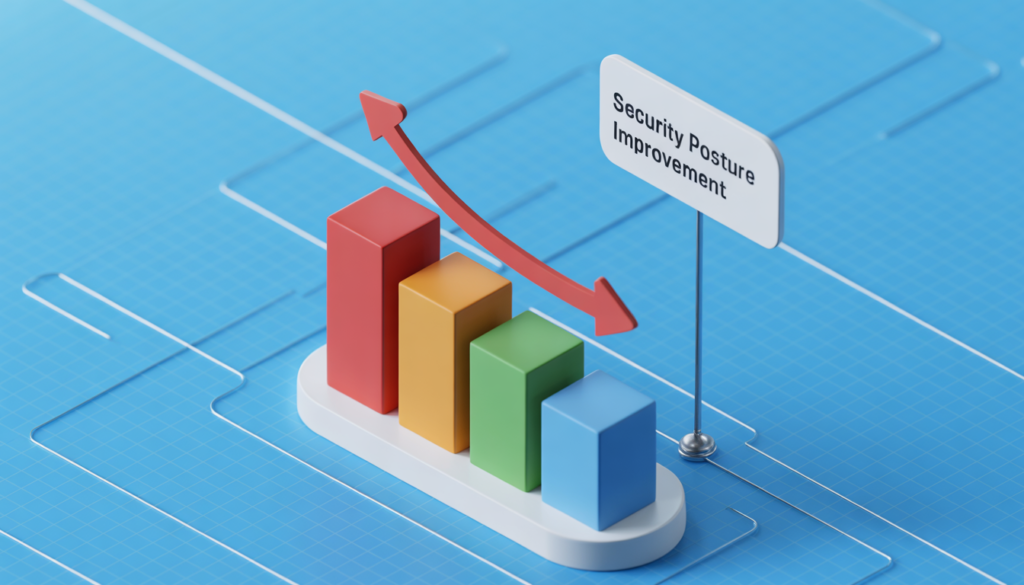

Securing the Spatial Web for AR enterprises demands a proactive, adversary aware posture. This white paper delivers practical guidance on risk, trust, and defensive architectures across spatial data planes. It blends governance with engineering, and presents actionable models like The Resilience Maturity Scale. Executives will find ROI driven security insights that align with operations and product roadmaps. The core thesis is clear: secure the spatial layer with zero trust, robust cryptography, and resilient incident response to sustain enterprise value. We explore threat vectors, trust domains, and architecture patterns that harden immersive environments.—
Securing the Spatial Web for AR Enterprises: Risk, Trust – Part I
Threat Landscape for Spatial AR
Spatial AR environments expose rich attack surfaces. Adversaries target data provenance, sensor feeds, and client devices. Spoofing position, tampering with calibration, and injecting phantom anchors pose real risks to reliability. In the threat landscape, deception and signal manipulation draw attention. Attackers blend digital and physical channels to exploit trust gaps across vendors. A coordinated effort can disrupt workflows, cause equipment misalignment, and degrade safety protocols. Enterprises must map these vectors to a defensible baseline and then push containment outward with disciplined, repeatable processes. Bold focus on prevention, detection, and response yields measurable improvements in mean time to recover from breaches. The aim is to reduce blast radius and limit lateral movement across spatial layers. Threat vectors and ensemble risks demand a structured response.
The second paragraph emphasizes the need for robust detection and response. The leadership must demand strict data provenance and end to end integrity checks. Lateral movement must be contained by architecture design and microsegmentation. In practice, teams implement signed payloads and verifiable anchors to ensure trust across devices and environments. This creates a foundation for secure edge processing and cloud coordination. The threat landscape informs every architectural decision and sets the baseline for risk reduction.
Identity and Trust in Spatial Data
Trust hinges on robust identity across devices, users, and services. In spatial ecosystems, identity spans XR headsets, IoT sensors, and cloud services. Policy grounded on least privilege reduces blast radius when a device is compromised. Decoupled authentication and device attestation help prevent impersonation. We rely on cryptographic binding of identities to spatial anchors, ensuring data originated from trusted sources. Access control must be dynamic, reflecting context such as location, time, and device posture. The goal is continuous verification rather than one time success. This approach supports secure collaboration in mixed reality environments where multiple parties contribute to a shared spatial graph.
The second paragraph discusses dynamic access decision making. Context aware policies guard critical operations like calibration updates, anchor creation, and sensor fusion. Data streams carry provenance tokens that enable downstream systems to validate origin. In practice, teams implement certificate based trust, short lived tokens, and hardware attestation for edge devices. The result is a trust fabric that resists spoofing and tampering while enabling legitimate collaboration. The emphasis remains on verifiable identities and auditable trust trails. The enterprise gains confidence to scale AR workloads without compromising safety or compliance.
Securing the Spatial Web for AR Enterprises: Risk, Trust — Part II
Data Privacy and Compliance in Mixed Reality
Privacy is fundamental in immersive environments. Spatial data often reveals sensitive operational details, internal layouts, or customer behaviors. Organizations must classify data by sensitivity and apply privacy preserving techniques. Pseudonymization, selective data masking, and on device processing reduce leakage risk. Compliance programs should map to sector specific regulations and cross border data flows. Data governance ties privacy controls to contractual obligations with partners. Clear retention periods and deletion processes help maintain control over long lived spatial datasets. Leaders must demonstrate privacy by design to regulators and customers alike. Privacy controls must be continuously tested against evolving threats and new use cases.
The second paragraph emphasizes practical privacy controls. We must ensure data minimization, purpose limitation, and consent management where applicable. When possible, process data locally and publish only aggregated results. Data lineage tracking helps verify how data transformed as it moved through the spatial stack. The approach must be auditable, with logs that survive incidents and investigations. This enables rapid forensics while maintaining user trust. The combination of governance discipline and technical controls yields a resilient privacy posture that scales with enterprise needs. Bold privacy safeguards protect reputation and long term ROI.
Sensor Management and Signal Integrity
Sensor integrity is critical for spatial consent and safety. Calibration drift, sensor spoofing, and timing attacks undermine mesh accuracy. We require secure boot, signed firmware, and verified updates for every sensor in the chain. Signal integrity checks must run continuously, with anomaly detection on fusion results. Time synchronization must be tight across devices to prevent data misalignment. Redundancy by design reduces single points of failure. The architecture should support graceful degradation rather than catastrophic collapse under attack. For high risk deployments, plan for offline operation and secure fallbacks.
In the second paragraph we highlight practical safeguards for sensor networks. Redundant sensing, cross checks, and cryptographic binding keep data trustworthy. We implement secure OTA updates that require dual signing and rollbacks. The objective is to preserve spatial coherence even when some channels suffer adverse conditions. The emphasis remains on robust telemetry and validated fusion results. With these protections, operators can continue to function under pressure and preserve safety critical outcomes.
Securing the Spatial Web for AR Enterprises: Risk, Trust — Part III
Cryptographic Governance and Key Management
Cryptographic agility protects future communications. We pursue a key management strategy that supports rapid algorithm transitions without downtime. Hardware security modules and secure enclaves protect keys at rest and in transit. Regular key rotation, revocation procedures, and forward secrecy guard data over its lifecycle. We also require robust key discovery and policy enforcement across ecosystems. Interoperability must not compromise security. The architecture supports auditable cryptographic traces for compliance and forensics. The end goal is to minimize cryptographic risk while keeping performance in check.
In the second paragraph we discuss practical governance. The organization maintains an updated key inventory with descriptors for each region or partner. We standardize on cryptographic protocols with proven resistance to quantum threats. Prototyping in controlled pilots helps tune performance before broad deployment. The policy framework ensures that cryptographic changes occur with minimal disruption to operations. The result is a robust, adaptable security posture aligned with enterprise risk appetite.
Secure Updates and Patch Cadence for Spatial Sensors
Patch management remains a linchpin of resilience. Spatial sensors deploy in environments that demand minimal downtime. We adopt a cadence that balances risk and stability. Security updates flow through verified channels, with staged rollouts and rollback options. Deployment pipelines include automated checks for compatibility and performance impact. We require end to end verification of each patch, including authenticity checks. Operational teams must monitor post patch behavior and collect telemetry for rapid diagnosis. The objective is a predictable update cycle that reduces exposure windows without interrupting critical AR workloads.
The second paragraph reinforces operational discipline. We enforce change control, backout plans, and documentation for every update. We monitor for unusual device behavior after patches to detect hidden issues quickly. The integration of software and hardware lifecycle management creates a predictable risk profile. Enterprises gain confidence to push updates that fix vulnerabilities while maintaining user experience and safety.
Defending Architectures for the Spatial Web AR Ecosystem — Part I
Zero Trust for Spatial Data Planes
Zero Trust treats every request as untrusted until proven. In spatial data planes, this means continuous verification of devices, users, and services. Microsegmentation isolates work streams so a breach in one segment cannot easily impact others. We enforce strict access controls for data at rest and in transit. Continuous authentication reduces reliance on perimeter defense alone. We design policy driven controls that adapt to changing contexts like device posture and user behavior. The result is a resilient spine for AR workloads.
In the second paragraph we frame practical deployment. We map spatial domains into secure zones and enforce least privilege across data flows. Device attestation complements user authentication. We maintain a continuous evaluation loop that updates policies as conditions evolve. The aim is to make compromise costly and detection fast while preserving productivity. The Zero Trust approach aligns with regulatory expectations and real world risks.
Microsegmentation in Spatial Meshes
Segmentation of the spatial graph reduces blast radius. We segment at multiple layers, including user, device, and data type. Each segment enforces its own policy and logging footprint. We implement strict network controls, encryption in transit, and integrity checks on data exchanges. Microsegmentation supports agile deployment of AR features without exposing the whole system. We also design east west controls to prevent lateral movement. This approach minimizes exposure while enabling legitimate collaboration in large scale deployments.
The second paragraph discusses operational realities. Segmentation requires governance to avoid policy sprawl. We use a model driven by risk scoring and automated policy generation. This keeps security aligned with business goals while preserving the user experience. The practical outcome is safer, more scalable spatial AR ecosystems.
Defending Architectures for the Spatial Web AR Ecosystem — Part II
API Security and Certificate Management
APIs link devices, edge services, and cloud platforms. Secure API design emphasizes strong authentication, granular authorization, and mutual TLS. We enforce certificate lifetimes that balance security with performance. We monitor for unusual API usage and enforce rate limiting to prevent abuse. We implement schema validation and input sanitization to reduce injection risks. The architecture includes automated key rotation and trusted certificate stores. This reduces risk from leaked credentials and credential reuse.
In the second paragraph we highlight operational practices. We standardize API contracts, implement versioned interfaces, and maintain robust logging. Security testing occurs in every sprint with automated scanning and manual reviews. The result is reliable, auditable API ecosystems that support rapid innovation without sacrificing trust.
Cryptographic Protocol Agility and Post Quantum Readiness
We plan for quantum threats without slowing progress today. The Crypto Plan includes migration paths for symmetric and asymmetric algorithms. We track algorithm maturity, performance tradeoffs, and interoperability constraints. We test migration sequences in isolated environments before live rollout. The governance process assigns responsibility for protocol transitions and public disclosures. The objective is perpetual readiness that keeps spatial AR secure across a decade.
The second paragraph stresses readiness and governance. We publish a clear roadmap with milestones, budgets, and risk assessments. This keeps executives aware of costs and benefits. The long term payoff is a secure foundation that survives technology shifts and vendor changes.
Defending Architectures for the Spatial Web AR Ecosystem — Part III
Observability Telemetry and Anomaly Detection
Observability ties security to operations. We collect telemetry from devices, edge nodes, and cloud services. Anomaly detection identifies unusual patterns in sensor fusion or user actions. We use wired and wireless indicators to detect tampering, spoofing, and data drift. Dashboards present risk posture in real time, supporting rapid decision making. We define alert thresholds that minimize fatigue while catching genuine threats. Observability is the backbone of proactive defense and rapid containment.
The second paragraph focuses on incident readiness. We compile runbooks and automate containment steps for common AR incidents. We coordinate with risk and compliance teams to ensure complete investigations. The outcome is a mature security posture that adapts quickly to new attack methods and saves time in crisis.
Incident Response Playbooks for AR Environments
Response playbooks sequence containment, eradication, and recovery actions. We predefine roles, contact lists, and escalation paths. Playbooks include steps for command center communication and legal coordination. We test plans through tabletop exercises and live drills. Post incident reviews feed back into training and controls, closing gaps over time. The goal is consistent, decisive action that reduces downtime and preserves safety.
In the second paragraph we explain governance and continuous improvement. We align IR with regulatory obligations and contractual commitments. Regular rehearsals ensure teams act with velocity under pressure. The practical payoff is less chaos when breaches occur and faster return to operations.
Defending Architectures for the Spatial Web AR Ecosystem — Part IV
The Adversarial Friction Framework
Adversarial friction makes it expensive for attackers to succeed. We design controls that force multiple hurdles: authentication, authorization, data integrity, and monitoring. Each control contributes to a resilience multiplier. We quantify friction with a practical model: higher friction reduces the probability of breach. We must balance user experience with protection depth. The framework guides architecture, policy, and technology choices toward sustainable defense.
The second paragraph shows how to apply friction in practice. We adjust friction through adaptive policies, risk scoring, and segmentation. This enables ongoing defense without disabling enterprise AR capabilities. The outcome is resilient operations that withstand motivated adversaries and evolving threats.
The Resilience Maturity Scale and Executive ROI
The Resilience Maturity Scale measures how well a firm resists, detects, and recovers from incidents. It includes five stages and specific criteria for each. We tie maturity to measurable security ROI. Benefits include reduced downtime, faster breach containment, and lower total cost of ownership. The model helps executives justify investments and prioritize capabilities. We also connect resilience to business outcomes such as uptime, safety, and customer trust. The framework supports continuous improvement and budget alignment.
The second paragraph emphasizes business value. We translate security into metrics executives understand, including MTTR, dwell time, and recovery costs. The scale guides roadmaps and resource allocation. The outcome is a clear path from initial security practices to mature, ROI driven resilience.
Chief Security Officer FAQ
Q1: What is the minimum viable zero trust for spatial AR?
A minimum viable zero trust requires continuous device and user verification. It includes signed communications, short lived tokens, and dynamic policies based on posture and context. Microsegmentation keeps data flows isolated. The approach reduces attacker access and accelerates detection. Experienced CSOs deploy a phased rollout with governance and measurable milestones. This yields early gains in risk reduction and sets the stage for full maturity. The focus remains on practical, incremental improvement that scales.
Q2: How do you quantify security ROI in AR initiatives?
We quantify ROI by linking security outcomes to business metrics. We calculate reduced downtime, faster incident containment, and lower breach costs. We model risk reduction with probability and impact scores. We compare current posture against a target maturity level. We assign budgets to capabilities that improve resilience and measure progress quarterly. The result is a transparent, data driven narrative for stakeholders and boards.
Q3: What is the role of cryptographic agility in the spatial web?
Cryptographic agility lets teams switch algorithms with minimal disruption. It defends against emerging threats and quantum risk. We implement hardware backed key management and forward secrecy. We validate transitions in staging before production. The governance process ensures timely updates and clear documentation. The outcome is a flexible, future ready security posture that does not lock in aging algorithms.
Q4: How should enterprises approach threat modeling for AR ecosystems?
Threat modeling should start with asset discovery and data flows across devices, networks, and cloud. We map threats to each process step, then assign likelihood and impact. We update models with new devices and use cases. We test defenses with red team exercises and simulated breaches. The process informs control selection and incident planning. The objective is a living model that stays aligned with business goals and evolving threat landscapes.
Q5: How can organizations improve visibility into spatial security?
We improve visibility through integrated telemetry, centralized dashboards, and distributed logging. We correlate device events, sensor data, and API activity. We implement anomaly detection and automated alerting. Regular audits verify data integrity and traceability. Transparency supports accountability and faster response. The approach yields confidence in security posture and supports executive decision making.
Q6: What are the key steps to establish an Architect’s Defensive Audit?
Define the critical assets and their threat exposures. Catalog controls and their owners. Score risks with a consistent framework. Validate that controls exist where needed. Review incident response readiness and recovery times. Align findings with the business risk appetite. Produce an action plan with owners and deadlines. The audit becomes a living document that drives continuous improvement. It also provides a clear baseline for regulatory and contractual compliance.
Q7: How should patch cadence be aligned with AR operations?
Patching should be scheduled to minimize user disruption and safety impact. We implement staged rollouts, rollback paths, and monitoring. Critical updates trigger rapid deployment with minimal downtime. We coordinate patch windows with operations and safety teams. The cadence balances risk reduction with service continuity. The aim is predictable maintenance, not crisis driven scrambling.
Q8: How do we measure the maturity of our spatial resilience?
We track progress on the Resilience Maturity Scale, using objective criteria per stage. Each domain crosses governance and technology. We audit, measure, and publish outcomes for stakeholders. The process connects technical controls to business results. The final value is sustained trust and uninterrupted AR capability for customers and workers alike.
Executive Summary Table: Threat Levels, Protocols, ROI
| Threat Level | Example Vector | Primary Controls | Expected ROI |
|---|---|---|---|
| Low | Minor data drift in sensors | Data validation, logging | 12–20% MTTR improvement |
| Moderate | Spoofed anchors in a controlled area | Attestation, access controls | 25–40% reduced downtime |
| High | Compromised edge hub | Zero Trust, microsegmentation | 50–70% risk reduction in critical paths |
| Critical | Data exfiltration across platforms | End to end encryption, forensic readiness | 70–90% exposure reduction over 12 months |
Architect’s Defensive Audit checklist
- Asset inventory and data flow mapping
- Identity and access policy coverage
- Encryption and key management practices
- Patch cadence and change management
- Incident response readiness
- Observability and logging coverage
- Third party risk management
- Compliance mapping and audits
Defining the final software architecture and governance
The executive needs a structured approach to implement and monitor the described controls. The audit yields a prioritized backlog with owners and deadlines.
In closing, securing the Spatial Web for AR Enterprises requires discipline, governance, and engineering rigor. The architectures presented here align risk management with operational resilience and measurable ROI. As threats evolve, the framework remains adaptable, enabling safe but ambitious AR deployments across industries. Executives should view zero trust as a starting point, not a destination, and must fund the continuous improvement of cryptographic agility, observability, and incident readiness. A resilient spatial enterprise protects people, operations, and reputations while enabling innovation. More than security is at stake; the business value depends on it.—
Meta description: A comprehensive white paper on risk, trust, and defensive architectures for securing the Spatial Web in AR enterprises.
SEO tags: spatial web, augmented reality, AR security, zero trust, threat landscape, cryptographic agility, resilience, incident response