
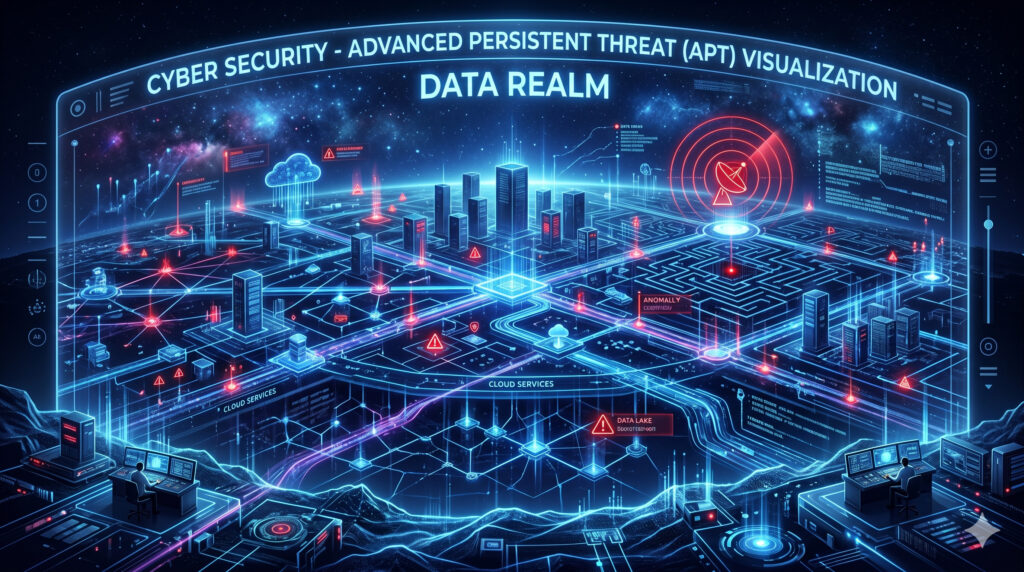
This white paper presents a practical approach to building a security culture that enhances operational resilience without adding friction to daily workflows. It centers on the Security Culture Paradigm and the Adversarial Friction Framework to align people, processes, and technology. The focus remains on risk mitigation, cryptographic agility, and ROI-driven security within modern infrastructure. The goal is to enable teams to act securely by default, not by compulsion, while preserving velocity across engineering and operations. The discussion blends strategy with concrete patterns for zero trust, API hardening, and governance that support resilient, frictionless security postures.
This introduction sets the stage for an actionable model that leaders can adopt. It emphasizes practicality over theory and offers concrete checklists, metrics, and decision points. Throughout, it ties resilience to measurable outcomes such as reduced mean time to recover, lower blast radius from compromises, and improved threat visibility without slowing releases. The overarching message is clear: security culture is a capability, not a cost center, and it must sustain momentum in high change environments.
We invite readers to adopt a disciplined framework that blends culture with engineering discipline. The framework presented here aims to reduce decision friction, improve threat detection, and accelerate secure delivery. With the right incentives, governance, and technical controls, resilience becomes a shared responsibility that strengthens posture without imposing toil. The architecture, audit procedures, and ROI models described below provide a practical path to durable security maturity. This white paper closes with a roadmap for adoption and continual improvement.
Meta description: A practical white paper on building a resilient security culture with minimal workflow friction.
SEO tags: security culture, resilience, zero trust, API security, cryptographic agility, ROI security, risk maturity
Fostering Security Culture for Resilience Without Friction
Foundations of Cultural Norms
Security begins with shared norms that shape daily decisions. Leaders promote accountability and psychological safety so teams report threats without fear of blame. To cultivate these norms, organizations codify clear expectations, for example, fast but careful change reviews, transparent incident postmortems, and explicit risk acceptance criteria. These norms align with a culture that treats security as a product quality attribute, not a gate to stall velocity. The most effective norms emerge where security is visible in design reviews and production dashboards, not buried in policy.
In practice, teams should observe that security is a reflex, not a hurdle. Developers learn to ask about risk during feature design, operations teams verify encryption and access controls in deployment, and product owners weigh security impact in roadmaps. This shared mental model reduces cognitive load on engineers. It also shifts incentives so safe choices advance business outcomes. Bold shifts in language and leadership tone reinforce this shift, creating a security posture that scales with the business.
Practices that Drive Frictionless Security
1) Integrate security into the continuous delivery pipeline. Security gates exist, but they are lightweight, automated checks. 2) Automate policy enforcement with intent-driven controls that adapt to context. 3) Foster open channels for threat intelligence sharing across teams. 4) Use risk-based prioritization for vulnerabilities to prevent queue buildup. 5) Reward secure experimentation with quick feedback loops.
Operational resilience depends on these practices. When developers see security success metrics in CI dashboards, they adjust design, code, and testing to maintain flow. Teams learn to treat risk as an optimization problem rather than as a binary pass or fail. Security is then a continuous discipline embedded in daily work, not a separate function. The approach reduces toil by shifting from posture policing to policy automation that supports velocity.
Leadership and Governance Structures
Governance must be lightweight yet decisive. A Security Steering Committee acts as an ultimate decision authority for risk thresholds and remediation targets. The committee defines the cadence for risk reviews, incident drills, and architecture decisions. It ensures alignment between product strategy and security requirements. Leaders communicate a unified message: security is a product capability, not an afterthought. This message resonates with engineering teams and external partners alike. The governance model must empower teams to make local decisions while preserving global risk visibility and accountability.
Operational Paradigms for Frictionless Security Culture
Paradigm 1: Integrated Security by Design
Security must be embedded in architecture from day zero. This means threat modeling informs service boundaries, data flows, and API interfaces. Teams adopt a common language for risk categories and adopt design patterns that minimize leakage and lateral movement. The architectural discipline includes cryptographic agility, adaptable authentication methods, and resilient data handling.
This paradigm elevates security to a design constraint rather than a post hoc fix. Engineers consider security implications as they prototype and iterate. Early prototypes incorporate secure defaults, such as minimal privilege, encrypted at rest, and authenticated by default. The result is a system that remains secure even as it evolves in response to market needs. The culture shifts toward proactive defense rather than reactive patching.
Paradigm 2: Continuous Assurance and Feedback
Continuous assurance turns security into a living feedback loop. Real-time telemetry from runtime security tools integrates with development backlogs. Security operates as a service, delivering guardrails not gatekeeping. This approach emphasizes invariant security metrics, declarative policies, and automated remediation where possible.
The feedback loop enables rapid experimentation with mitigations and instant visibility into their effects. Teams learn which controls produce the best security outcomes with the least friction. The feedback becomes a core product capability; security evolves from a policy layer to an enabling layer that sustains velocity with resilience. Executives gain confidence from measurable improvements in risk posture and delivery tempo.
Leadership and Governance in Operation
In practice, leaders must sponsor and fund automated security playbooks that scale across diverse environments. They ensure security champions exist in each squad, bridging product goals with security controls. Governance preserves risk visibility while respecting team autonomy. It sets expectations for incident response, change control, and data governance. The outcome is a security culture that is visible in every sprint review and architecture decision. It becomes a shared responsibility that aligns with strategic priorities and operational realities.
The Security Culture Paradigm: Engineering Resilience Without Workflow Friction
The Security Culture Paradigm
The Security Culture Paradigm reframes resilience as an organizational capability. It emphasizes people, process, and technology alignment. Teams adopt a language of risk-aware decision making and build incentives that reward secure delivery. The paradigm integrates threat intelligence with product roadmaps to ensure risk signals lead to concrete improvements. This approach promotes practical security engineering that scales with business growth and product complexity.
Engineering Resilience through Cryptographic Agility
Cryptographic agility enables rapid adaptation to emerging threats. This capability involves rotating keys with minimal disruption, deploying post-quantum readiness where appropriate, and maintaining compatibility across services. The architecture supports secure key management, algorithm agility, and automated certificate lifecycles. Teams design APIs and data stores to minimize exposure and ease revocation. The net effect is a system that remains secure as cryptographic standards evolve and adversaries adapt their tactics. Security becomes a driver of reliability rather than a brake on progress.
The Adversarial Friction Framework in Practice
Adversarial Psychology and User Behavior
Adversaries target human factors as easily navigated attack surfaces. A robust defense treats users as intelligent agents who respond to clear signals and practical constraints. Training focuses on recognizing social engineering without inducing fatigue. Security messaging centers on actionable steps and real-world scenarios. This approach reduces risky impulses and strengthens user trust. Adversarial psychology informs risk scoring by surfacing the most plausible manipulation paths.
Threat Vector Taxonomy
A practical taxonomy categorizes threats by attack surface, vectors, and attacker objectives. It yields a structured view of risk and guides prioritization. The taxonomy typically includes supply chain, cloud misconfigurations, credential theft, API abuse, and data exfiltration. Teams map each threat to concrete controls, such as MFA strengthenings, network segmentation, and API rate limiting. The taxonomy becomes an actionable map that reduces confusion during incidents and streamlines response playbooks.
Zero Trust and Beyond: Architecting Trusted Rapid Flow
Zero Trust Reimagined for Frictionless Control
Zero Trust must empower teams rather than inhibit them. This means continuous verification, dynamic access control, and contextual authentication that adapts to behavior and risk signals. Security policy becomes a living set of rules embedded into service meshes, identity providers, and API gateways. The architecture favors automated risk scoring and expedited revocation when anomalies appear. The outcome is stronger assurance with a more fluid developer experience.
Lateral Movement Prevention and Microsegmentation
Microsegmentation confines blast radii by restricting east-west movement. This requires precise policy definition and robust telemetry. The design enforces least privilege at every layer and uses adaptive segmentation with automatic reconciliation of trust boundaries. Teams implement zero trust across on premise and cloud environments, ensuring consistent enforcement. The result is reduced lateral movement even when a segment is breached and easier containment during incidents.
API Hardening and Cryptographic Agility for Agile Environments
API Security and Identity
APIs present rich attack surfaces through insecure endpoints and weak identity checks. Strong authentication, adaptive authorization, and signed requests guard these interfaces. API gateways should enforce scopes and claims, log every access, and rotate secrets automatically. Developers should embed security tests in CI pipelines and treat API contracts as first-class artifacts. This practice reduces exposure without slowing development cycles.
Key Management and Crypto Agility
Key management must marry security with speed. Automate key generation, rotation, and revocation. Employ hardware-backed key storage where feasible and maintain cross-service cryptographic compatibility. The agility to switch algorithms and keys without service disruption is essential. Teams document cryptographic lifecycle policies and monitor drift from best practices. This discipline secures data in transit and at rest while accommodating evolving cryptography standards.
Metrics, ROI, and the Resilience Maturity Scale
The Resilience Maturity Scale
The Resilience Maturity Scale grades an organization on four levels: Foundation, Practice, Integration, and Optimization. Each level links to concrete outcomes such as mean time to detect, mean time to recover, blast radius, and security ROI. The scale helps leadership tie investments to measurable resilience. It supports a staged, data-driven approach to improvements and provides a common language for cross-functional executives. The scale complements audits and benchmarks against industry peers.
Architect’s Defensive Audit and ROI Metrics
This section introduces an executive table that pairs threat levels with recommended protocols and estimated ROIs. It also includes a structured “Architect’s Defensive Audit” checklist. The audit captures governance, technology, and process dimensions that executives can review quarterly. The combination of a maturity model, executive audit, and ROI estimates offers a clear path to reduce risk while maintaining development velocity.
Architect’s Defensive Audit
- Governance: risk thresholds, escalation paths, incident drills
- Architecture: microsegmentation, secure defaults, cryptographic agility
- Operations: automated remediation, threat intelligence feeds, change control
- Metrics: MTTR, MTDT, blast radius, control coverage
- People: security champions, training cadence, awareness programs
Chief Security Officer FAQ
FAQ Part A
Q1: How do you balance risk with user experience in a zero friction culture?
A1: In practice you measure risk tolerance, design with secure defaults, and automate security guards. You align product goals with security outcomes using a framework that rewards safe delivery. The balance emerges from risk-based gating that favors speed where risk is low and tight controls where risk is high. Teams keep a running backlog of mitigations tied to business impact. This approach preserves velocity while maintaining robust defenses. Continuous feedback ensures the culture remains adaptable to changing conditions.
Q2: What governance model supports continuous training without bottlenecks?
A2: The model uses a lightweight Security Steering Committee and embedded security champions. It blends policy with automation so training aligns with real-world events. Quarterly drills test readiness and ensure lessons translate into practice. The governance framework sets clear ownership, acceptance criteria, and success metrics. It eliminates redundant approvals by empowering squads to respond within guardrails. The result is a learning loop that strengthens risk awareness without delaying deployments or updates.
FAQ Part B
Q3: How do you quantify security ROI in an agile dev stack?
A3: ROI is calculated from three pillars: risk reduction, delivery velocity, and cost avoidance. We translate risk reductions into financial terms using threat models and estimated incident costs. We track velocity improvements from automated controls and faster release cycles. Finally, we quantify avoided losses from potential breaches and faster recovery. The aggregation produces a defensible ROI figure that resonates with product, finance, and risk owners. The approach remains adaptable as risk profiles shift and new attack vectors emerge.
Q4: How do you address API security without slowing release cycles?
A4: We use contract-first design, automated security tests, and policy-driven gateways. API keys rotate automatically, and authentication is standardized across services. We apply rate limiting and anomaly detection at the edge. We integrate security checks into CI pipelines to catch issues early. This approach ensures security does not block iteration. Teams gain confidence that new APIs satisfy security requirements at speed.
FAQ Part C
Q5: What is the role of cryptographic agility in resilience?
A5: Cryptographic agility enables rapid adaptation to new threats. We implement key rotation, algorithm diversity, and forward secrecy. We keep a living registry of cryptographic capabilities across services. Automation ensures seamless upgrades with minimal downtime. The strategy reduces exposure risk if a specific algorithm becomes vulnerable. It also supports post-quantum readiness in a controlled, non disruptive manner, maintaining system continuity and trust.
Q6: How do you handle incident response in a frictionless workflow?
A6: We operate a streamlined incident response playbook with automated containment actions and rapid communication templates. Alerts feed directly into response queues, and escalation follows predefined criteria. We practice tabletop exercises and inject realistic scenarios to sharpen decision making. While the workflow remains frictionless, it preserves discipline and timing. Postmortems generate actionable improvements for both technology and process domains. The outcome is faster containment with learning loops that reduce recurrence.
Conclusion Building a Security Culture: Eliminating Workflow Friction
This article presents a practical blueprint for building a resilient security culture without workflow friction. The Architecture, the Adversarial Friction Framework, and the Resilience Maturity Scale together provide a coherent path from strategy to execution. The emphasis on integrated design, continuous assurance, and measurable ROI helps organizations secure velocity without compromising safety. By embedding security thinking into every sprint, teams gain the confidence to innovate. The governance and audit mechanisms ensure ongoing improvement and a defensible security posture.